
The holisticselling Newsletter (#8)
Published on LinkedIn on July 23, 2025
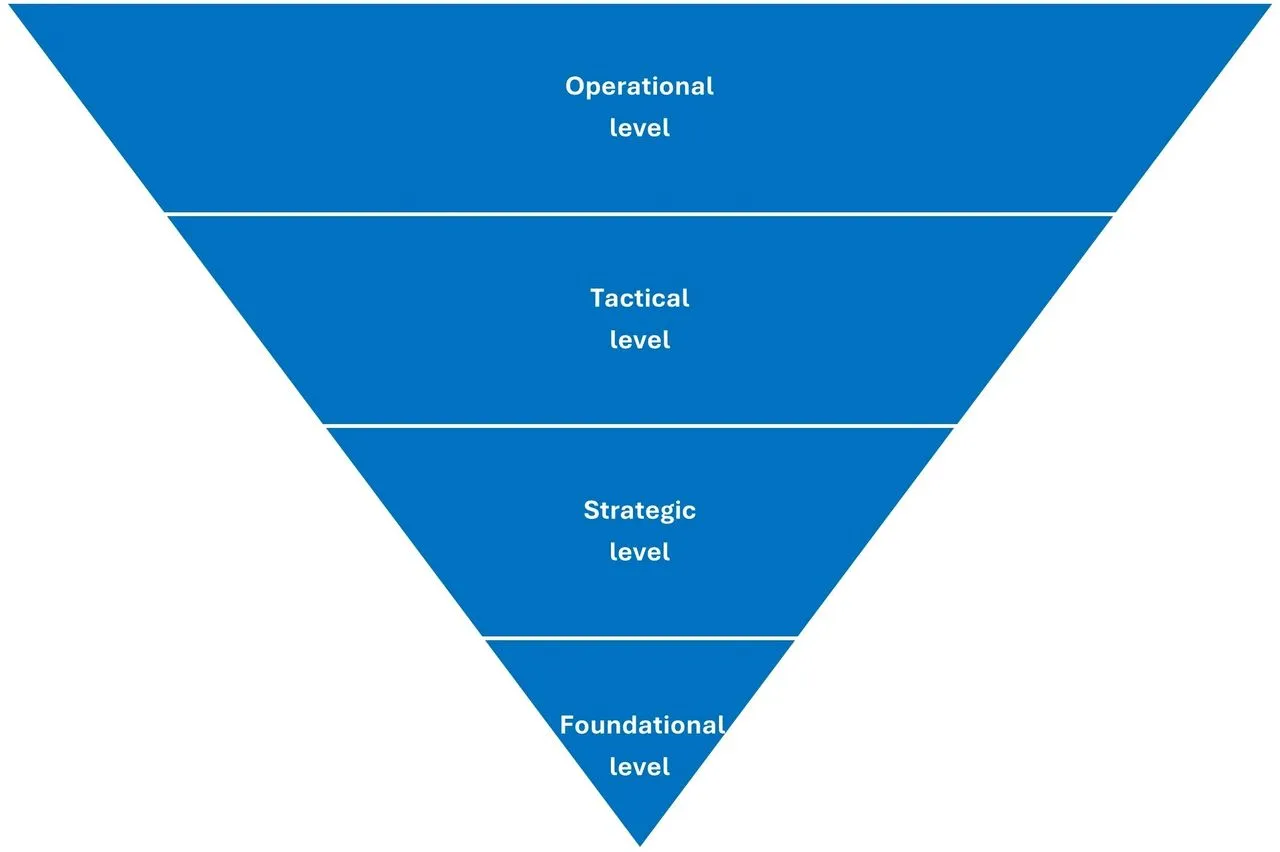
As you know by now, the purpose of the holisticselling framework is to align all organizational processes and functions towards supporting your frontline team members to deliver extraordinary experiences and outcomes to customers. In order to achieve success with a holisticselling mindset, we need to ensure that the company is synchronized across 4 different levels (see diagram above):
- Foundational level
- Strategic level
- Tactical level
- Operational level
Over the last couple of weeks, we started discussing the tactical level of the holisticselling framework. As a reminder, these tactics provide the guidance and support needed to enable your frontline employees to implement your strategies and achieve your goals. They are the necessary link between strategy and execution. I have seen many cases where companies come up with well-intended strategies but don’t convert them into the right tactics, which leaves the frontline team members with a lack of guidance and support to execute the strategies. That is why this level is so critical.
In the last couple of weeks, we covered the go-to-market (GTM) and sales enablement tactics. Today we will focus on one of my favorite topics – marketing.
Marketing plays a critical role in enabling the customer-facing teams to deliver extraordinary experiences and outcomes to customers and prospects. It can however get out of synch with the needs of the Sales and Account Management teams, which is why the holisticselling approach is so important.
Marketing fulfills 2 major missions:
- Build the brand. As we mentioned in the newsletter #3, branding is a critical component to your B2B sales success. You need to build a brand that is inspirational for employees, customers and prospects by focusing on the positive outcomes you intend to deliver. This provides air cover for all the touchpoints orchestrated by your customer-facing teams. A strong brand becomes the ‘destination of choice’, while a weak brand becomes a boat anchor that kills your chances to win.
- Create leads. Marketing is a key engine of pipeline growth. It is instrumental to the acquisition of inbound and outbound leads. We will talk more extensively about lead generation in the operational level of the holisticselling framework.
In order to achieve these 2 missions, the marketing team performs a number of activities that need to be aligned with (a) the company goals and strategies and (b) the tactics deployed by the other functions of the company.
Here are the key activities that marketing needs to focus on, in order or priority:
- Customer advocacy. I put this as #1 because, in my experience, this area is often neglected. Converting your customers into references, references and advocates, and advocates into compelling customer case studies needs to be a top priority. These customer case studies need to include specific proof points that align with your value statements and with the customer targeted business outcomes. They need to support your sales plays, since these stories offer the proof points needed to make sure your sales plays drive customer engagement. It is also important to motivate your advocates to publish positive reviews on websites such as G2 or Gartner Peer Reviews. Needless to say, your customer advocacy program needs to be front and center for your marketing team.
- Content generation. Aligned with customer advocacy, generating contents aligned with your sales plays is also a critical priority – and one that is often under resourced. Remember that your customers and prospects do not care about your products and capabilities, they care about achieving their business outcomes and addressing the challenges and pain points that prevent them from doing so. Your contents therefore have to be driven by an outside-in perspective. You need to focus on telling stories to your customers and prospects that relate to their business outcomes, challenges and pain points. I have seen many situations where most of the contents are produced around products and capabilities – which (as mentioned before) your customers and prospects do not care about. Do not force them into translating ‘what you do’ to ‘how it could help me’. If a customer or prospect needs to produce the effort of trying to understand how your product will help them achieve their business outcomes, they will give up. That is not their job. Your job is to deliver content to them that is aligned with what they want to accomplish. It is always about them – not about you!
- Website. Your website also needs to be aligned with the outside-in perspective driven by your sales plays. The contents published on your website need to allow the visitors to very quickly understand how you can help them address their business outcomes, challenges and pain points – and yet, I still see many websites focused on company products and capabilities. Put yourself in the shoes of a customer or prospect persona. Lead with business outcomes, connect these outcomes with the potential challenges and pain points these personas may experience, then (and only then) show them how your capabilities can help them remove these challenges and achieve their business outcomes, and finally (and most importantly) share with them which customers have deployed your capabilities to achieve the very same business outcomes. Your entire website should respect the same fundamental logic as your sales plays. As part of your website investment, it is also critical to optimize your SEO (Search Engine Optimization) performance to make sure your website ranks higher in search engine results for relevant keywords. You want to make sure your customers and prospects find you first when they do their research.
- Analyst relations. As we know, when customers and prospects are looking to buy a software solution, they do 70% of the work by themselves before reaching out to you. One of their primary sources of information in that first phase of their journey is the analyst community. They will review analyst reports and consult with their analyst(s) of choice. If your company is not advertised by these analysts as a leader in your space, you will start the selection process at the back of the pack. It is therefore imperative to invest in analyst relations, understand how they rate the software vendors and be proactive about achieving a leader status. This needs to require the full attention of the ELT.
- Campaigns. Your sales, account management and marketing teams need to collaborate on selecting which sales plays to convert into specific campaigns. The purpose of these campaigns is to build leads for these specific sales plays. We will go into more detail about campaigns when we discuss the operational level of the holisticselling framework.
- Digital marketing. The investment in digital marketing needs to be aligned with your sales plays and campaigns. This includes PPC (pay-per-click) advertising on platforms like Google Ads and LinkedIn ads, social media marketing on platforms like LinkedIn and X, and email marketing to support your campaigns. This can be run internally or delegated to a specialized agency.
- Events. This category includes physical events (organized by your company or by 3rd parties) and virtual events (such as webinars). Events are critical to create connections with your targeted audience. They can be expensive, so the key is to select the combination of physical and virtual events that give you the highest level of exposure for the investment.
- Marketing systems. The world of marketing technology in the B2B software world has become extremely complex and confusing. This will even accelerate with the release of more and more AI-driven offerings. As the diagram below shows, the number of marketing technology products has exploded to over 15,000.
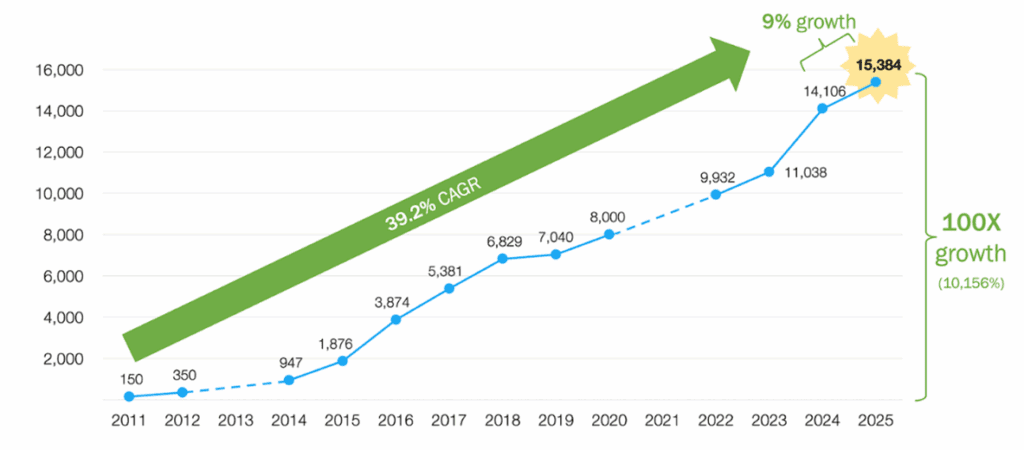
The marketing technology landscape is broken down into many categories, such as Sales Automation, Content Marketing, Events, eCommerce Platforms, CRM, Marketing and Campaign Automation, Lead Management, Collaboration, Customer Experience, Social Media Marketing and DIM (Digital Asset Management). This can be quite overwhelming. The key is to have a ‘true north’ strategy that can guide your tool selection, otherwise everything will look like a solution to a problem. Think first about the end-to-end process you need to enable and then find the right combination of tools that enable that process. The key is to find the right technology to enable every phase in the customer lifecycle:
- Identify your target personas and accounts based on the ICP (Ideal Customer Profile) imbedded into your sales plays.
- Reach out to these personas early in their buying process (when they are still in the ‘dark funnel’).
- Engage with them once they show attention and interest.
- Nurture the engagement to convert leads into opportunities.
- Convert the opportunities into wins.
- Implement the solution successfully.
- Ensure adoption, utilization and value realization.
- Focus on customer retention (>95% gross retention should be the goal).
- Grow your customers to achieve > 105% net retention.
- Convert your customers into advocates.
- Leverage your advocate relationships to create a virtual cycle of growth.
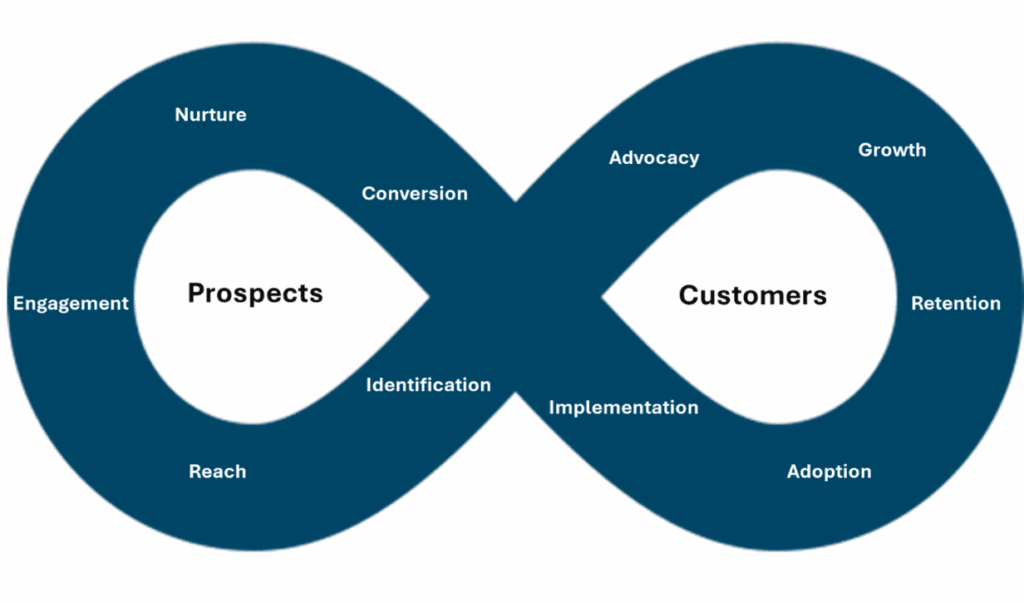
The key question is: Do you have the right marketing technology landscape to enable the customer lifecycle journey, from identification to advocacy?
9. Marketing operations. The marketing operations team is the control tower for all marketing investments. Their role is to ensure that the entire marketing technology platform aligns with the overall company strategy in alignment with the holisticselling model, to generate the reports from these tools that convert data into insights and to measure the adoption and value of each tool over time
10. Marketing investment. Last but not least, let’s bring up the elephant in the room. What percentage of your revenue should you dedicate to marketing? That percentage may of course depend on your company revenue and maturity stage. I have seen midsize mature B2B software organizations trying to make it work with 2% of revenue, and that seemed to result in poor branding and weak lead generation. No company can afford to miss the mark in these areas. The percentage may range from 2-3% for large (>$1B) companies to 10-12% for small (<$100M) companies. The key is to start with your goals, understand your strategies, develop your tactics and then determine how much you will need to invest to ensure that your frontline team members can leverage these tactics to deliver extraordinary experiences and outcomes to your customers and prospects.
Finally, as we mentioned for go-to-market and sales enablement, all marketing materials should also be loaded into your company-proprietary AI LLM in order to be used on demand by your frontline team members in preparation for their interactions with the target personas in their accounts. That will ensure that these marketing materials are consistently used to deliver the right experiences and outcomes to customers and prospects.
Message #17
- Focus first on customer advocacy. Nothing is more powerful than the voice of your customers. You need customer advocates to build your brand and your reputation.
- Develop compelling customer stories that are aligned with your sales plays.
- Invest in developing marketing contents that follow the outside-in perspective of your sales plays. Lead with business outcomes, not company capabilities.
- Ensure your website also follows the outside-in logic of your sales plays. Make it easy for your target audience to find solutions to their problems.
- Invest in SEO to ensure your target audience finds you first.
- Treat analyst relations as a top priority. Ensure that you earn the right to be rated as a leader in their reports.
- Invest in the right combination of digital and physical campaigns and events to optimize brand exposure and lead creation with your target audience.
- Ensure that your marketing technology investments are carefully chosen to enable your ‘true north’ marketing process, otherwise you will end up with a hodgepodge of disconnected tools.
- Ensure that your marketing technology landscape enables the customer lifecycle journey, from identification to advocacy.
- Ensure that you invest enough in your Marketing tactics to ensure success in your brand building and lead generation efforts.
- Load all your marketing materials into your company-proprietary AI LLM to ensure your frontline employees can leverage them to deliver great experiences and outcomes to customers and prospects.
Why is this critical to B2B selling? Because your Marketing tactics are critical to give your frontline team members the aircover of a strong brand, the ability to create qualified leads and the opportunity to deliver extraordinary experiences and outcomes to prospects and customers through their entire lifecycle journey.
Questions for you:
- Are you managing customer advocacy as a top priority? Is your customer advocacy program resourced appropriately?
- Are you specifically investing in developing customer success stories that can be used as proof points for your sales plays?
- Are you building your marketing materials with an outside-in focus on customer business outcomes, challenges and pain points?
- Is your website built in such a way that your target audience can easily find how you will address the business outcomes, challenges and pain points that matter to them?
- Are you investing in SEO to make sure your customers and prospects can find you first when they search for solutions to their problems?
- Are you treating analyst relations as a critical priority to ensure your company gets rated as a leader in their reports?
- Are you optimizing your physical and digital marketing investments to optimize brand exposure and lead generation?
- Have you loaded your marketing materials into your company-proprietary AI LLM to make sure your frontline team members can question it and obtain the right information in real time to enable tailored and relevant interactions with their customers and prospects?
Next week, we will continue our review of the holisticselling tactics. I hope this newsletter contains information that will help you optimize your B2B selling efforts. Feel free to share your thoughts as always!
Tags: