
The holisticselling Newsletter (#4)
Published on LinkedIn on June 25, 2025
(25) The @holisticselling newsletter (#4) | LinkedIn
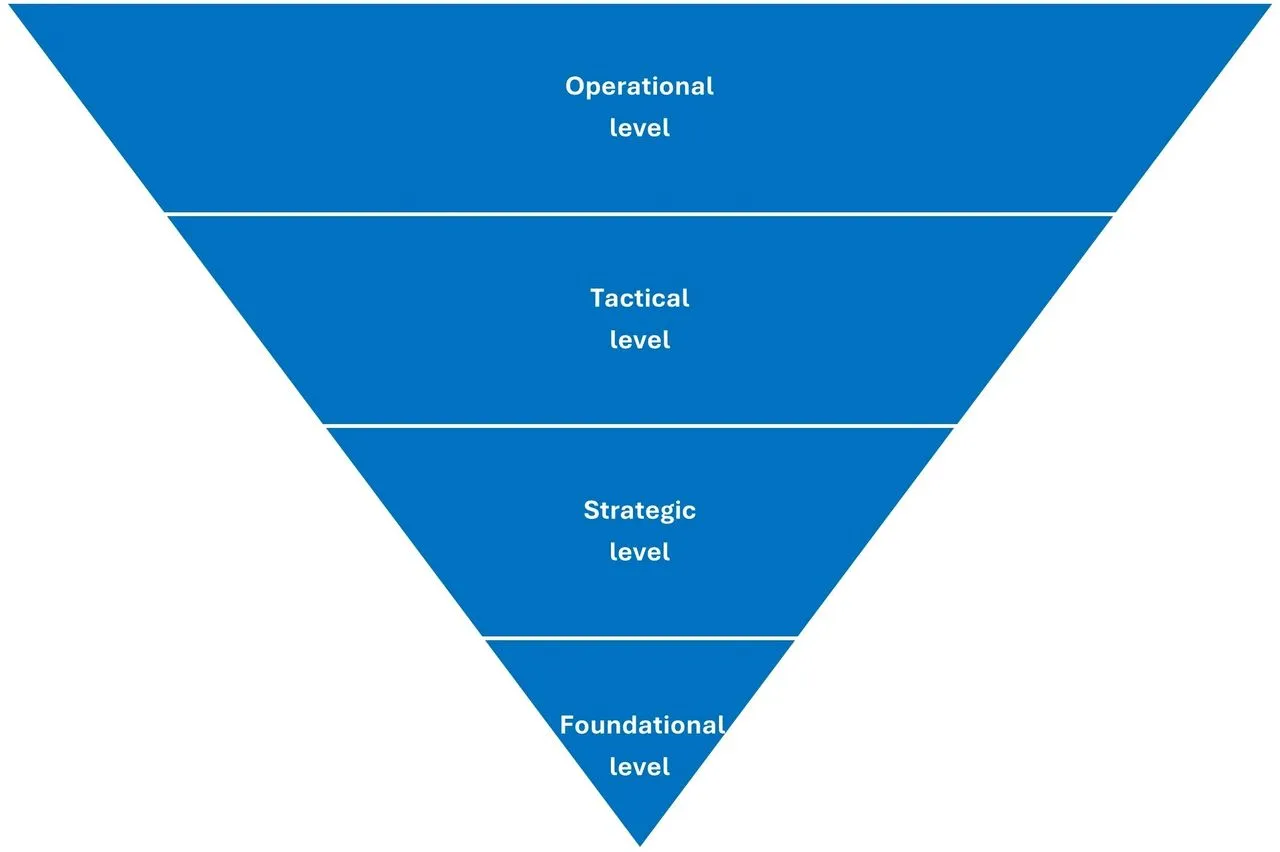
As mentioned in previous newsletter issues, the purpose of the holisticselling framework is to align the entire organization towards empowering your frontline team members to deliver the right outcomes to customers and prospects. In order to achieve success with a holisticselling mindset, we need to ensure that the company is synchronized across 4 different levels:
- Foundational level
- Strategic level
- Tactical level
- Operational level
Today, we will finalize our thoughts on the strategic level of the holisticselling framework. In last week’s newsletter, we covered 3 key elements:
- Your brand,
- Your reputation and
- Your core value proposition.
Today, we will discuss:
- Your product management strategy,
- Your go to market strategy,
- Your value strategy,
- Your organization’s balanced scorecard and
- The implications on your organization’s design principles.
Let’s start with your product management strategy. In line with the holisticselling framework, the #1 objective of your product management team is to deliver products to market that deliver successful business outcomes to customers. When that happens, the number of product issues is reduced, customer debt is minimized, your reputation improves and your frontline customer-facing employees are not constantly fighting fires with customers, which improves morale and opens the door to positive growth-oriented conversations.
Remember that this is not about more features and functions. It is about delivering business outcomes that meet and exceed your customers’ expectations. The best product management experience I had was at Prodika (a PLM startup), which built software from the users back – focusing on optimizing the user experience and delivering the right outcomes. That enabled us to win deals against the titans of the industry.
If your products do not enable your customers to achieve their business outcomes, you will face customer debt. When that happens, a percentage of your engineering capacity needs to be dedicated to fixing the product issues that caused customer debt in the first place. The more product issues, the more engineering capacity needs to be diverted from producing and releasing new products and features. That will impact your ability to innovate, but no innovation will compensate for delivering poor customer outcomes with the products you currently have in the market. Priority #1 is to ensure your current products meet and exceed customer expectations. That seems simple enough, but, if your products are not designed with the end user in mind, they will become more complex to use and less aligned with the outcomes sought by your customers.
Message #8: Minimize customer debt by delivering products built to deliver the right customer business outcomes and by dedicating whichever percentage of your engineering capacity is needed to eliminate the issues with your current products.
Let’s now examine your go-to-market (GTM) strategy. I have seen many examples of GTM strategies focused on inside-out product capabilities. Customer-facing team members are trained to present their products to customers and prospects. As we know, this is irrelevant to the buying teams. Customers and prospects engage with a seller because they have a problem to solve or an opportunity to address. Customer-facing team members need to be trained on the outcomes your customers are pursuing. The phrase “Stop selling, start helping” emphasizes a shift from focusing on product features to focusing on understanding and meeting customer needs. By prioritizing the customer’s best interests and genuinely trying to help them, sales will naturally increase as a result of building trust and positive relationships. This implies a 180-degree shift in your GTM strategy – from inside-our product features to outside-in customer outcomes. Once again, while that sounds simple, it is a difficult transition to go through for B2B software companies that, for so long, have focused on pushing their products to market.
Message #9: Build a go-to-market and sales enablement strategy built on customer business outcomes, not product features.
Connected with your GTM strategy is your value strategy. Delivering the right business outcomes to your customers is typically measured in terms of hard and soft financial benefits. Every software company has a version of a Value Engineering team engaged in the sales process to help determine what the investment ROI would be for customers and prospects. These Value Engineering teams have had mixed success due to several issues (wrong assumptions, poor methodology, overstated benefits, etc.). My advice here is to build a flexible value framework that can be adapted to how customers and prospects calculate value. For example, in the Sourcing and Procurement area, customers have different ways of calculating cost savings (hard vs. soft, vs. last year, vs. plan, etc.). It is important to first understand how the customer or prospect calculates value and then map your methodology to theirs, otherwise your numbers will not be useful to the buying team.
On top of that, the major miscue I see in Value strategies is the fact that B2B software companies do not invest in measuring value for/with their customers after implementation. The only company I saw doing this very well was i2 Technologies in the early 2000s. i2 had a Strategy Opportunity Assessment (SOA) team in charge of working with customers and prospects to come up with the business case as part of the sales process, and also a Strategy Impact Assessment (SIA) team in charge of working with customers to measure the value realized 6-12 months after implementation. That closed loop methodology helped i2 prove the value their solutions delivered, built their reputation and brand in the market and turned customers into advocates. I truly believe this is an investment worth making.
Message #10: Implement a flexible value proposition methodology that can be adapted to how customers and prospects measure value and build a value delivery team that can work with customers to measure the value delivered after implementation.
Finally, let’s look at the balanced scorecard used by the leadership team to manage the business. True to the spirit of holisticselling , you need to make sure your key metrics focus on the business outcomes you deliver to your customers and prospects. Many balanced scorecards focus on the financials and operating metrics of the business. While necessary, focusing only on the financial stakeholders misses the point that a company’s financial success should not be an end in itself, but the result of delivering the right business outcomes to customers by creating the right level of engagement from their frontline employees (which is why the holisticselling framework is built on an upside-down pyramid). As Sir Richard Branson said, “Clients do not come first. Employees come first. If you take care of your employees, they will take care of the clients”. Empowering your frontline employees to deliver the right outcomes to your customers is the right way to generate to drive your financial success.
Message #11: Build a balanced scorecard that measures employee engagement, customer success and financial success. Remember that long term financial success can only be achieved by improving employee engagement and customer success.
One concept related to your balanced scorecard is how you build your organizational design. By focusing first on employee engagement and customer success, you avoid the trap of focusing on internal measures of functional efficiency. Functional teams tend to increase in size and complexity when their focus shifts to internal efficiency measures. All functional teams should focus on 2 goals:
- Is what I do helping our frontline customer-facing team members meet and exceed our customer expectations?
- Is what I do contributing to delivering successful business outcomes to our customers?
The purpose of your organizational design is to reduce internal frictions and make it as easy as possible for the frontline team members to drive sales and make customers successful. I have heard countless times that frontline team members spend 70% of their time battling internal processes, and only 30% of their time on customer-facing, value-driving activities. That needs to change.
The role of the CEO is critical in maintaining a synchronized and streamlined organization that keeps track of its core mission – support your frontline team members to deliver the right business outcomes to customers. The CEO also needs to ensure that the core values of the enterprise, such as empathy and humility, prevent the emergence of functional fiefdoms. All functions need to be reminded that their goal is to support the core mission of the enterprise. If that does not happen, each function starts building its own set of metrics to justify their performance, and the core mission of the enterprise dissipates in the background.
Message #12: Keep your organization as simple and lean as possible with a maniacal focus on empowering your frontline team members to deliver the right outcomes to customers and prospects. Ensure that all functions are aligned to deliver on the company core mission instead of focusing on their own metrics.
Why is this critical to B2B selling? All these strategic areas (product management, go-to-market, value, balanced scorecard and organizational design) have to be designed and managed with an unwavering commitment to the company core mission: enable your frontline team members to deliver the right business outcomes to customers and prospects. That alignment and focus will greatly enhance the success of your B2B selling efforts.
One last note: The overview of the strategic level was not meant to be a complete review of all B2B strategies in the software industry, but rather the subset of strategies that, based on my experience, needs to be addressed and corrected if a company is truly committed to empowering its frontline team members to deliver the right business outcomes to its customers.
Questions for you:
- Is your product management strategy focused on delivering the right customer business outcomes and minimizing customer debt?
- Is your go-to-market and sales enablement strategy designed to help the customer-facing teams deliver the right business outcomes to customers and prospects (instead of training them on product features)?
- Does your value engineering strategy enable you to adapt your business cases to the specific ways customers measure value? Do you have the organizational capacity to assess the value delivered to customers after implementation?
- Does your executive leadership team use a balanced scorecard that includes employee engagement and customer success metrics on top of internal financial and efficiency metrics?
- If your organization built with the primary design intent to reduce internal frictions, empower the frontline customer-facing team members and deliver successful business outcomes to customers?
That completes our overview of the strategic level of the holisticselling framework. Next week, we will start discussing the tactical level of the framework. As always, thoughts and comments are welcome!
Tags: