The HolisticSelling Newsletter (#2)
This issue of the newsletter was published on LinkedIn on June 11: : https://lnkd.in/gb5tE2cy.
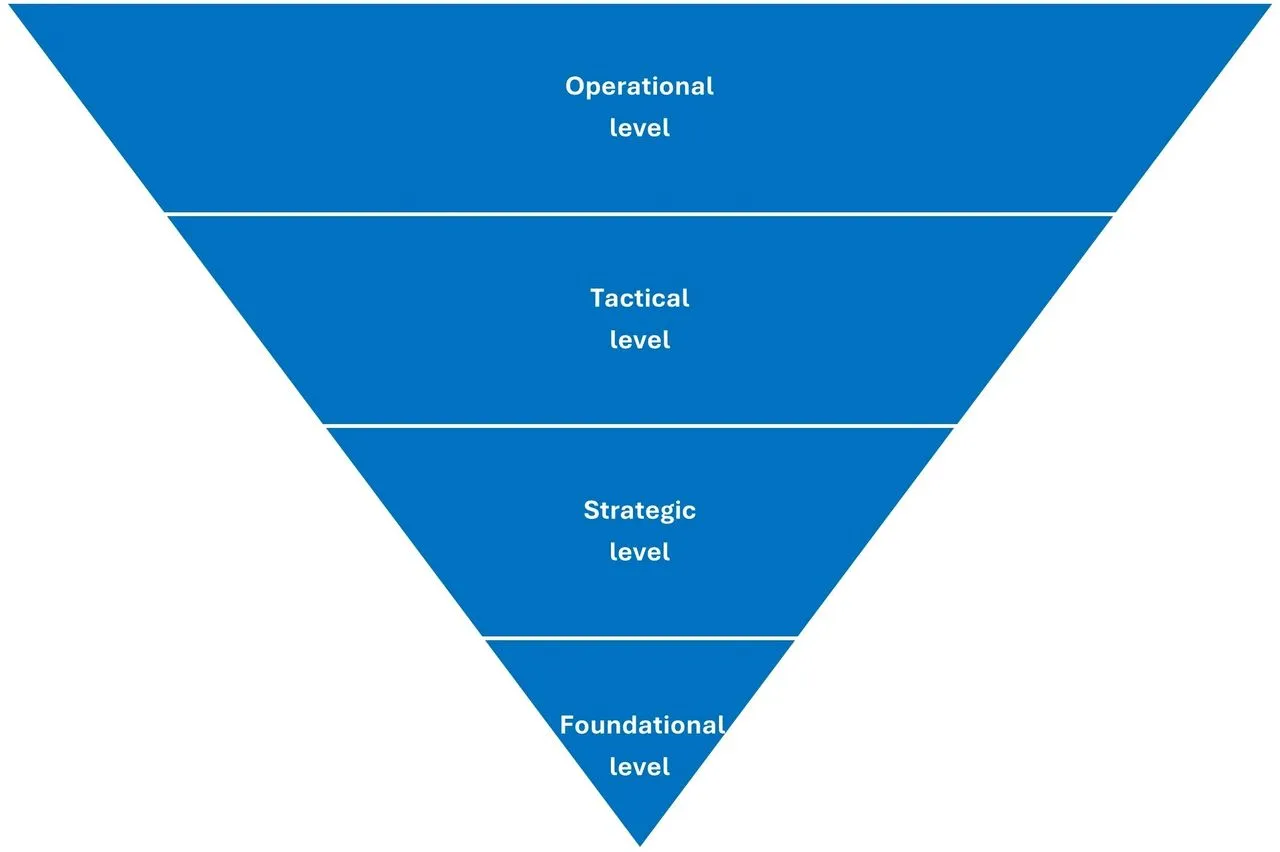
As mentioned in my newsletter last week, the purpose of the @HolisticSelling framework is to align all organizational processes towards supporting the front-line to deliver the right outcomes to customers. In order to achieve success with a @HolisticSelling mindset, we need to ensure that the company is synchronized across 4 different levels:
– Foundational level
– Strategic level
– Tactical level
– Operational level
We explored the foundational level last week. See the post here if you want to take another look at it.
Today, we will start exploring the strategic level of the @HolisticSelling framework.
There are a number of key strategic elements that will influence your ability to exceed your sales goals and deliver extraordinary experiences and outcomes to customers every step of the way. In alignment with the @HolisticSelling methodology, the strategic level includes strategic insights that need to be aligned across all key functions in the enterprise:
– Your company’s business model (Finance).
– Your company’s brand and unique value proposition (Marketing).
– Your company’s reputation (Customer Success).
– Your approach to prospects and customers (Sales, Account Management and Go-to-Market).
– Your ability to deliver successful products (Product Management and Development).
– Your organization’s design principles (HR).
– Your organization’s metrics and balanced scorecard (Leadership Team).
Today we will discuss the first one: your business model.
The most critical strategic component is the company’s business model. Much has been said about the debate between #GAAC (Growth At All Costs) and #PEG (Profitable Efficient Growth). As the names imply, GAAC emphasizes rapid growth and market share capture at the expense of profitability, whereas PEG refers to a company’s ability to sustain or improve profitability while growing its customer base and revenue. While the general consensus is that PEG is the right strategy for the long term, the software industry has seen many examples of companies pursuing GAAC for a few years to grow their market share and become leaders in a specific space, and then monetizing that leadership position to win more deals at higher margins. A successful GAAC strategy does not mean ‘free for all’ investments leading to a dysfunctional overbloated organization growing beyond its ability to deliver. That would be reckless. It means making conscious and strategic decisions to increase investments in Sales, Marketing and Customer Success to accelerate the rate of growth, complimented by strategic M&A activity.
On the other hand, PEG companies that focus on a slower rate of growth tend to miss the opportunity to become market leaders (especially if some of their competitors pursue a GAAC model) and have to settle for being #2 or #3 in their space, which makes it more difficult for them to compete. On top of that, if the PEG model is implemented with a focus on profit over growth, it can negatively impact your ability to empower your frontline team members to deliver extraordinary experiences to customers and prospects at all moments of truth.
One related concept to consider in that regard is the Rule of 40, which suggests that a company’s combined revenue growth rate and profit margin should be 40% or higher for it to be considered successful and attractive to investors. The application of that rule will differ based on the lifecycle of the company. Early stage companies may prioritize growth over profit and more mature companies may prioritize profit over growth. Regardless of the company’s maturity, when investments in Sales, Marketing and Customer Success are sacrificed for the sake of increasing margins, it creates an environment of cost containment that makes it more difficult to empower the frontline and deliver the right business outcomes to customers. As the saying goes, ‘you cannot save your way to prosperity’. Simply cutting costs or reducing investments to increase margins is a shortcut. The right model is to invest in Sales, Marketing and Customer Success to grow the ranks of successful customers, which will then feed the virtuous cycle of growth and prosperity.
Message #4: Adopt a balanced business model that does not sacrifice growth for the sake of increasing profit. Invest in empowering your frontline employees to deliver extraordinary experiences to customers and prospects, which will enable you to increase the number of happy customers and fuel your success.
Why is this critical to B2B selling? Because forcing profits to accelerate faster than topline growth will reduce your ability to invest in Sales, Marketing and Customer Success, which will impact your long term growth.
Questions for you:
1. Does your organization prioritize profit growth over sales growth?
2. Does the focus on increasing profit faster than sales impact the investments in Sales, Marketing and Customer Success that are needed to increase the number of successful customers?
3. How is the Rule of 40 deployed in your company? For example, 10% growth and 30% profit margin, or 20% growth and 20% profit margin? How does that impact your B2B sales success?
Tags: